
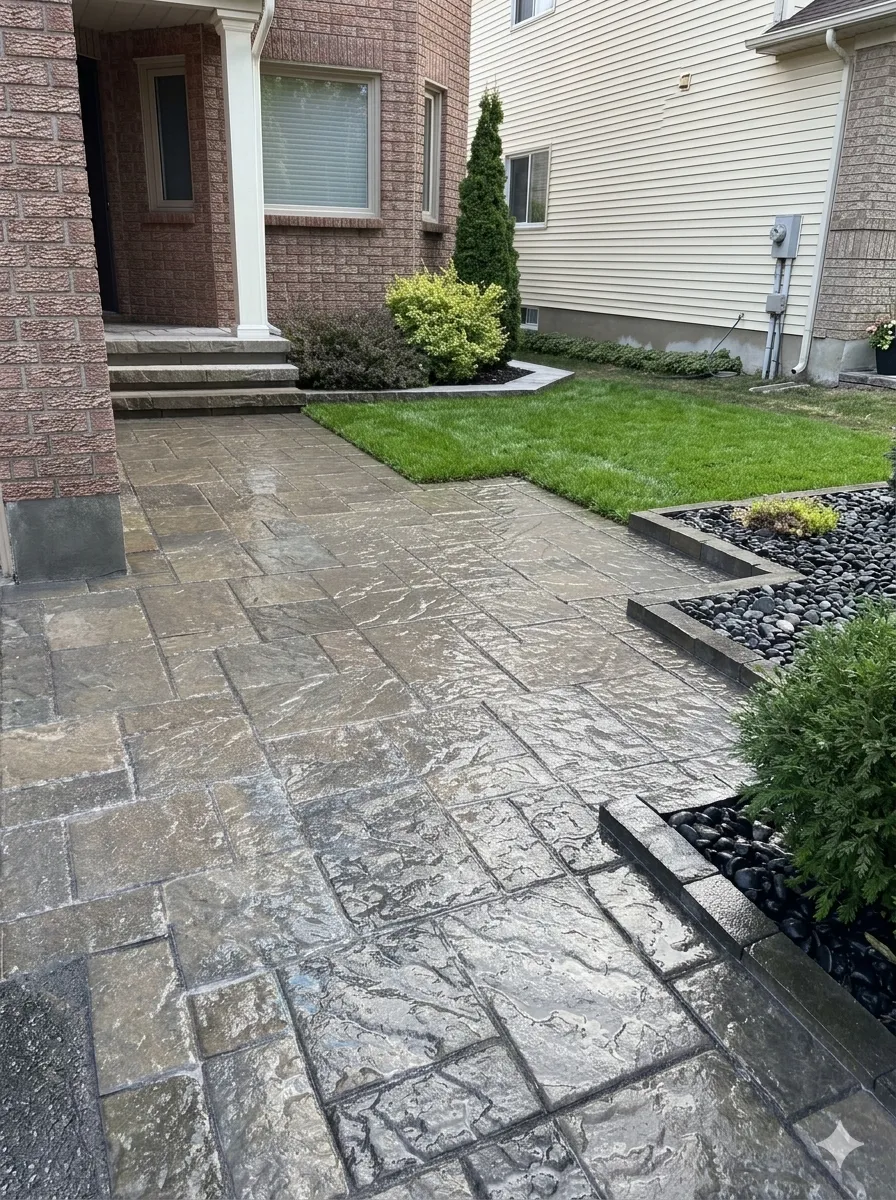
Interlock Driveway Maintenance in Barrhaven: Caring for Pavers Through the Seasons
An interlock driveway contributes to your home’s appearance while handling parking, foot traffic, deliveries and changing weather. Keeping it in good condition involves more than an occasional wash. Seasonal inspections and appropriate cleaning help you spot problems and care for the surface without damaging the paving or joints.
For homeowners planning interlock driveway maintenance in Barrhaven, the best starting point is knowing what was installed. Your paver product, joint material and pavement system influence which cleaning methods, winter products and maintenance treatments are suitable.
At One Cut Landscape & Design, we help homeowners consider the condition of their driveways and identify when maintenance, repairs or more extensive work may be appropriate.
This guide explains how to care for an interlock driveway through spring, summer, fall and winter, along with the signs that deserve professional attention.
Know Your Driveway Before Choosing Products
Before purchasing a cleaner, sealer or bag of joint material, check your installation records.
Useful information includes the paver manufacturer, product name, existing surface treatment and joint material. If you do not have those details, ask the original installer or arrange an assessment before applying unfamiliar products.
Also establish whether the driveway uses conventional interlock or a permeable pavement system. Their maintenance requirements differ.
The Concrete Masonry & Hardscapes Association’s operation and maintenance guide provides a reference for conventional interlocking concrete pavement care. Use it alongside instructions for the actual products installed on your property.
Keep a simple maintenance record with photographs, product details and dates of any repairs or treatments. This can make future decisions easier.
A Seasonal Maintenance Plan for Barrhaven Driveways
You do not need to perform every maintenance task every season. Focus on the conditions that are present and the instructions for your paving system.
Season | Main priorities | What to watch for |
|---|---|---|
Spring | Remove winter debris and inspect the exposed surface | Settlement, joint loss, damaged units and persistent puddles |
Summer | Manage spills, weeds and routine cleaning | Stains, loose pavers and unsuitable cleaning methods |
Fall | Remove leaves and prepare for snow clearing | Blocked drainage routes and uneven areas needing attention |
Winter | Clear snow and use approved ice-control methods | Equipment contact, excessive deicer use and recurring ice |
A short inspection at each seasonal transition helps you notice changes before they become harder to address.
Spring: Inspect After the Snow Clears
Once the driveway is visible and conditions allow, walk around the entire surface.
Look at the parking areas, edges, garage entrance and connection to the front walkway. Compare any concerns with previous photographs if you have them.
Check for:
Pavers that have become noticeably uneven.
Depressions where water collects.
Cracked or deteriorating units.
Open joints or missing joint material.
Movement along the driveway border.
Marks or chips that may relate to snow removal.
Observe the driveway during rainfall or snowmelt. Note where water travels and whether new puddles form.
A slightly different surface appearance after winter does not automatically indicate structural damage. However, sudden sinking, unstable paving or substantial movement warrants assessment. Keep people and vehicles away from an area that appears unsafe.
Remove Winter Debris Carefully
Sweep up loose debris using a method appropriate for the surface. Avoid pushing material into drainage openings, planting beds or permeable joints.
If washing is needed, choose a suitable day and follow the manufacturer’s instructions. Avoid creating runoff that could refreeze across walking areas.
A spring clean is also a useful opportunity to identify stains before applying any treatment.
Summer: Manage Spills Before They Become Harder to Remove
Driveways can collect oil, grease, soil and other residue during everyday use.
When a spill occurs, address it promptly using a method suitable for the substance and paving. For an oil spill, an appropriate absorbent material can help collect residue before cleaning. Avoid washing it toward a storm drain.
Choose a cleaner intended for the stain and paver product. Test it in an inconspicuous area, follow the label and protect nearby plants and surfaces.
The CMHA guide to cleaning, sealing and joint sand stabilization discusses cleaning as a product-specific process. The right treatment depends on what is being removed and the condition of the paving.
Do not mix cleaning products or assume that a stronger concentration will produce a better result. Persistent stains may need professional treatment or, in some cases, selective paver replacement.
Be Careful With Pressure Washing
Pressure washing can be appropriate for some installations, but the method matters.
Excessive pressure, a concentrated spray or working too close to the surface can damage finishes or dislodge joint material. A driveway may look cleaner while being left with joints that need attention.
Before proceeding, check the paving and joint-product instructions. If hiring a cleaning service, ask how the operator will protect the surface and manage any joint material removed.
Do not adopt a universal pressure setting from an unrelated product or installation. Different paving finishes and joint systems may require different approaches.
For a driveway with loose units, deep joint loss or existing surface deterioration, have those conditions assessed before aggressive cleaning.
Inspect Joints Without Treating Every Gap the Same Way
Joints are part of the pavement system, so missing material deserves attention.
However, replenishing them is not simply a matter of sweeping any available sand across the surface. The replacement material needs to be compatible with the installation and existing product.
Polymeric sand, conventional joint sand and the aggregate used in permeable paving have different requirements. Mixing them indiscriminately can create problems.
Ask what preparation is needed before replenishment. Follow the relevant instructions for joint depth, application conditions, cleanup and any activation process.
Adding joint material also will not correct sunken pavers. If the surface has moved, the cause beneath or around it needs investigation.
Manage Weeds and Organic Debris
Removing leaves, soil and other debris helps keep the driveway tidy and reduces material accumulating in joints.
If weeds appear, choose a removal method appropriate for the paving system. Avoid disturbing joint material unnecessarily or using treatments that could damage nearby planting.
Weeds do not automatically mean the entire driveway needs reconstruction. Their presence should be considered alongside joint condition, surface stability and routine care.
Moss or recurring organic growth may also prompt a closer look at shade, moisture and cleaning needs. Treating the visible growth without considering those conditions may lead to repeated work.
Avoid promising yourself a permanently weed-free driveway after one treatment. Ongoing care remains part of ownership.
Understand White Deposits Before Treating Them
A pale or white deposit on concrete pavers may be efflorescence, although appearance alone does not identify every mark.
Efflorescence involves salts deposited at the surface. It can affect appearance without meaning the pavers have failed.
The CMHA guide to maintaining hardscape appearance explains that efflorescence itself does not damage pavers and discusses using suitable specialist cleaners when treatment is desired. Persistent or widespread concerns should be reviewed with the contractor or manufacturer.
Avoid reaching immediately for an acidic household cleaner. Confirm the likely cause and an appropriate treatment before applying chemicals.
If sealing is being considered, discuss existing deposits and staining first rather than covering an unresolved surface condition.
Fall: Clear Leaves and Prepare the Driveway for Winter
Fall maintenance focuses on keeping the surface and water routes clear while addressing concerns before snow hides them.
Remove accumulated leaves and soil, especially where they collect beside borders or at low points. Check that nearby drainage features remain unobstructed.
The CMHA winter preparation guide highlights preparation and compatible winter care products. Although written for patios, these general care principles are relevant to concrete pavers; driveway loading and snow-clearing arrangements also need consideration.
Review any uneven areas before winter. A raised paver can interfere with walking and may catch snow-clearing equipment.
If repairs are needed, ask about suitable scheduling and conditions. Avoid rushing a treatment simply because colder weather is approaching.
Agree on Snow Storage Areas
Consider where cleared snow will go.
Avoid obstructing important drainage routes, door access or visibility at the driveway entrance. Discuss nearby planting and decorative features with anyone providing snow removal.
Where appropriate, identify driveway edges before snow arrives so equipment operators can recognize the boundaries.
Winter: Use Snow-Clearing Equipment Appropriately
Snow removal should suit the paving surface and its condition.
Check the paver manufacturer’s recommendations and discuss suitable equipment setup with your snow removal provider. Protective blade edges or other adjustments may be appropriate for the installed product.
Avoid striking raised joints or aggressively scraping an uneven area. Report movement that makes clearing difficult rather than repeatedly forcing equipment over it.
Do not assume every chip or mark is unavoidable winter wear. Reviewing the clearing method can help reduce unnecessary surface damage.
Keep walking routes usable and monitor areas where meltwater repeatedly refreezes. Recurring ice may indicate a water-management issue that needs attention when conditions allow.
Choose Deicing Products With Care
A product labelled “ice melt” is not automatically suitable for every concrete paver.
Follow the paving manufacturer’s guidance and the deicer’s application instructions. Consider nearby plants, other surfaces and any relevant household requirements as well.
The CMHA guidance on deicing chemicals and concrete pavers recommends removing snow mechanically and reserving deicers for ice control rather than using them as a substitute for snow removal. It also emphasizes limiting application to what is necessary.
Avoid repeatedly adding more product without checking its effectiveness and instructions. No deicer should be treated as harmless at any application rate.
If your driveway is permeable, confirm which winter practices are compatible with that system before adding traction material.
Permeable Driveways Need a Different Maintenance Approach
Permeable interlocking pavement is designed to move water through its joints and underlying structure. Keeping that function working requires appropriate care.
Do not fill permeable joints with ordinary sand or polymeric sand intended for a different system. The specified joint aggregate has a particular role.
The CMHA maintenance guide for permeable interlocking concrete pavement addresses sediment accumulation, inspection and cleaning. It also notes that pressure washing alone is generally not an optimal approach to removing embedded sediment.
Keep loose soil and landscaping materials from being stored directly on the surface where they could enter the joints.
If water behaviour changes, arrange an assessment rather than assuming the system only needs a surface rinse.
Decide Whether Sealing Is Appropriate
Sealing is a separate maintenance choice, not a repair for uneven paving or poor drainage.
The decision depends on the paver product, any factory-applied treatment, existing sealer and the appearance you want. Some sealers change colour or sheen and introduce future reapplication requirements.
Before proceeding, ask about compatibility, surface preparation and suitable application conditions. Review a test area where appropriate.
Avoid adopting an automatic annual sealing schedule. Follow the relevant product guidance and assess the existing finish.
If the driveway is stained, unstable or holding water, resolve those issues before considering a cosmetic treatment.
Know When Maintenance Becomes Repair Work
Routine care can keep a driveway cleaner and help identify issues, but it does not correct every problem.
Arrange an assessment if you notice persistent settlement, loose pavers, spreading edges or recurring puddles. Repeatedly adding joint material or sealing the surface will not address movement in the supporting layers.
Tell the contractor when the problem started, whether it changes seasonally and what previous work has been done.
A repair may involve lifting and reusing sound pavers after correcting the affected area. More widespread issues may require a broader scope. The cause and condition should guide that decision.
Frequently Asked Questions About Interlock Driveway Maintenance in Barrhaven
1. How often should I inspect my driveway?
Inspect it at seasonal transitions and after noticing a change such as pooling, movement or damage. Spring and fall are useful times for a more thorough review. Follow any additional maintenance schedule provided for your installation.
2. Can I pressure wash my interlock driveway?
Possibly, but check the paver and joint-material instructions first. Excessive pressure or poor technique can damage finishes and remove joint material. A professional cleaning assessment may be helpful if the surface is deteriorated or its products are unknown.
3. Does every interlock driveway need sealing?
No. Sealing depends on the product and your preferences. Confirm compatibility and understand how the treatment changes appearance and future care. It does not replace repairs or correct drainage.
4. What should I use to refill the joints?
Use material specified for the pavement system and compatible with the existing installation. Conventional and permeable driveways have different requirements. Identify the system before purchasing or applying joint material.
5. Why is water collecting in the same place?
A depression, altered drainage route or another site condition may be involved. Observe when pooling occurs and take photographs. Persistent or new water collection should be assessed before assuming that cleaning or sealing will solve it.
6. Can damaged pavers be replaced individually?
Often, depending on the installation and availability of compatible units. Retaining spare original pavers can help with future repairs. If movement caused the damage, the supporting conditions should also be investigated.
Care for Your Barrhaven Driveway With One Cut Landscape & Design
Seasonal care helps you understand your driveway’s condition and respond to changes early. The most useful routine combines appropriate cleaning, compatible winter practices and attention to joints, edges and water movement.
At One Cut Landscape & Design, we help homeowners assess existing interlock and discuss repairs or improvements where needed. If your driveway has become uneven, developed persistent puddles or needs a closer review, we can help you consider the next steps.
Contact us to discuss your interlock driveway in Barrhaven and request a quote.